
Issue Date: 10 May 2011
Ref: PEN11/06

GOOD REASONS TO CHOOSE LOAD HANDLING EQUIPMENT
By Richard Short, Sales Director, Penny Hydraulics
Recent “new registration” figures show that the market for light and medium sized commercial vehicles is picking up after a couple of very depressed years. This is good news for industry and commerce in general because it shows business confidence is returning.
Hidden beneath the basic market statistics for new commercial vehicles is something that many people in the industry understand implicitly. Rarely is a vehicle now supplied to an end user without some form of conversion or special preparation being completed. This can range from basic ply-lining (perhaps now limited to delivery vehicles) through storage equipment and electrical services and lighting to specialist load handling and lifting equipment such as cranes or platform lifts.
This is no surprise. The market has come to understand the benefits of providing vehicle owners and operators with the right equipment to do their jobs safely and efficiently. The latest statistics from the HSE show that in freight transport and delivery occupations well over half of all reportable injuries (ie those which lead to three or more days off work) are caused wholly or in part by handling, lifting or carrying loads manually or by slips, trips and falls. Overall accident rates have fallen in the past decade, thanks to campaigns by the Government and individual industries’ own initiatives, but there is still more to do.
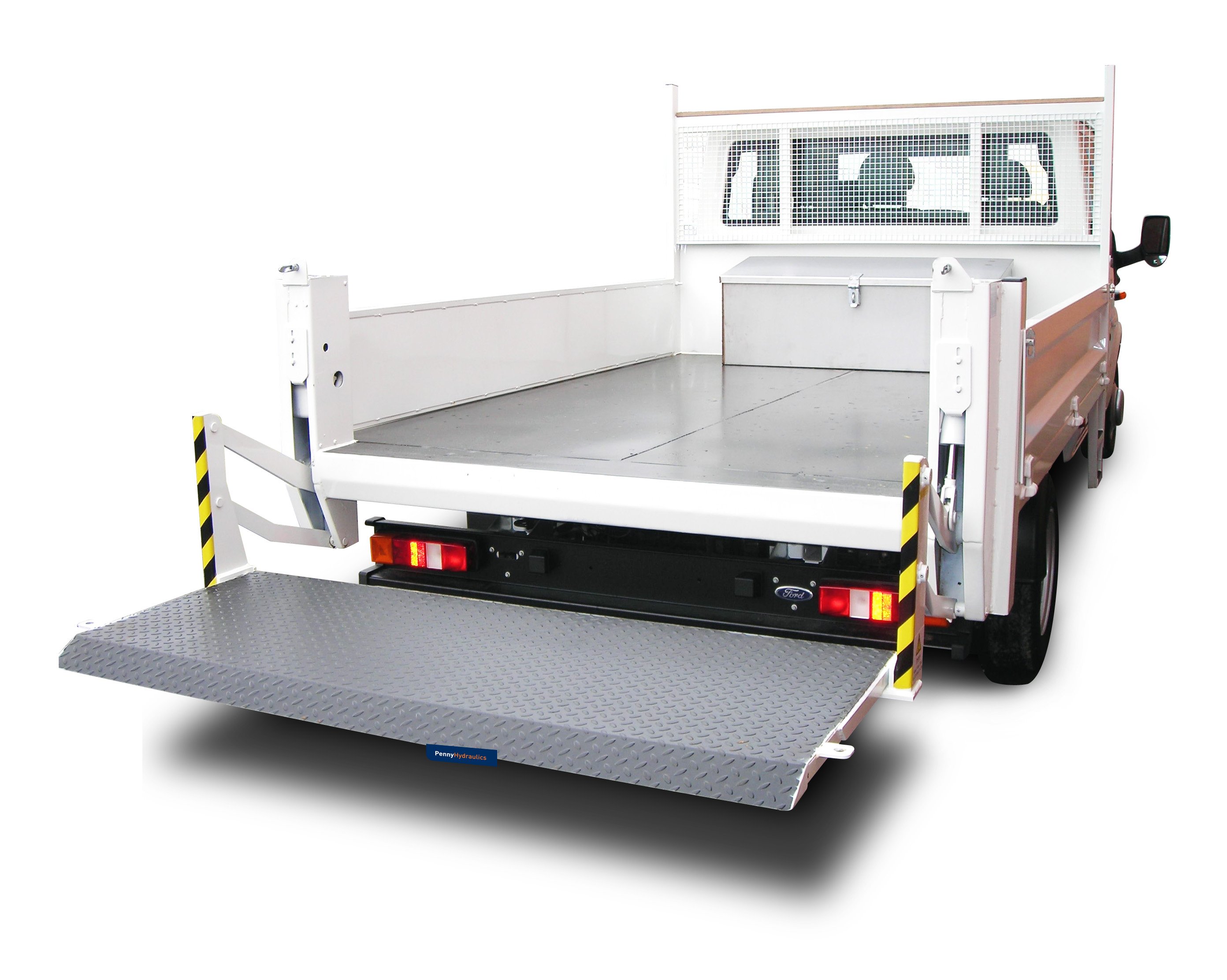
In many cases installing a lightweight and compact electric crane or side or rear mounted platform lift, such as those supplied by Penny Hydraulics, is all that is required to provide operators with an effective and economical way to avoid manual handling and lifting and therefore reduce or eliminate many of the risks. Devices for almost any type of commercial vehicle are available to handle loads from 25kg up to around 2000kg. Cranes with even larger maximum working loads are generally only fitted to HGVs.
The other main driver for change is efficiency. Basic vehicle prices, although now rising slightly, have remained relatively static for some time while labour and related costs have continued to go up. In any case, over a three to five year projected vehicle life time the cost of the driver or operator will far outweigh the cost of most small to medium sized vehicles. This means that anything which improves the efficiency and, above all, the productivity of the driver/vehicle combination is well worth considering.
Load handling equipment such as cranes and platform lifts make it easier for people to do their work on their own and remain fully productive throughout the whole day rather than becoming tired (and hence slower and more prone to mistakes or accidents) at the end of their shift. In many cases the presence of load handling equipment removes the need for a driver’s mate which provides an immediate cost and productivity benefit. Even when a second or third person is present they no longer need to take part in load handling operations and are free for more productive and profit-generating tasks.
To make the best possible use of the vehicle and load handling combination is it important that the conversion work is completed to the highest possible standards. This protects the overall investment and helps to ensure equipment is fit-for-purpose. Reputable conversion specialists will add value through design and consultancy to help optimise the vehicle for a specific application. Most of the leading vehicle manufacturers have approved or accredited converters who have passed rigorous certification procedures that allow them to undertake work while keeping the vehicle within its warranty. Penny Hydraulics, for example, has this status with Volkswagen, Renault and Nissan commercial vehicles in the UK.