
Issue Date: 15 January 2009
Ref: PEN09/01

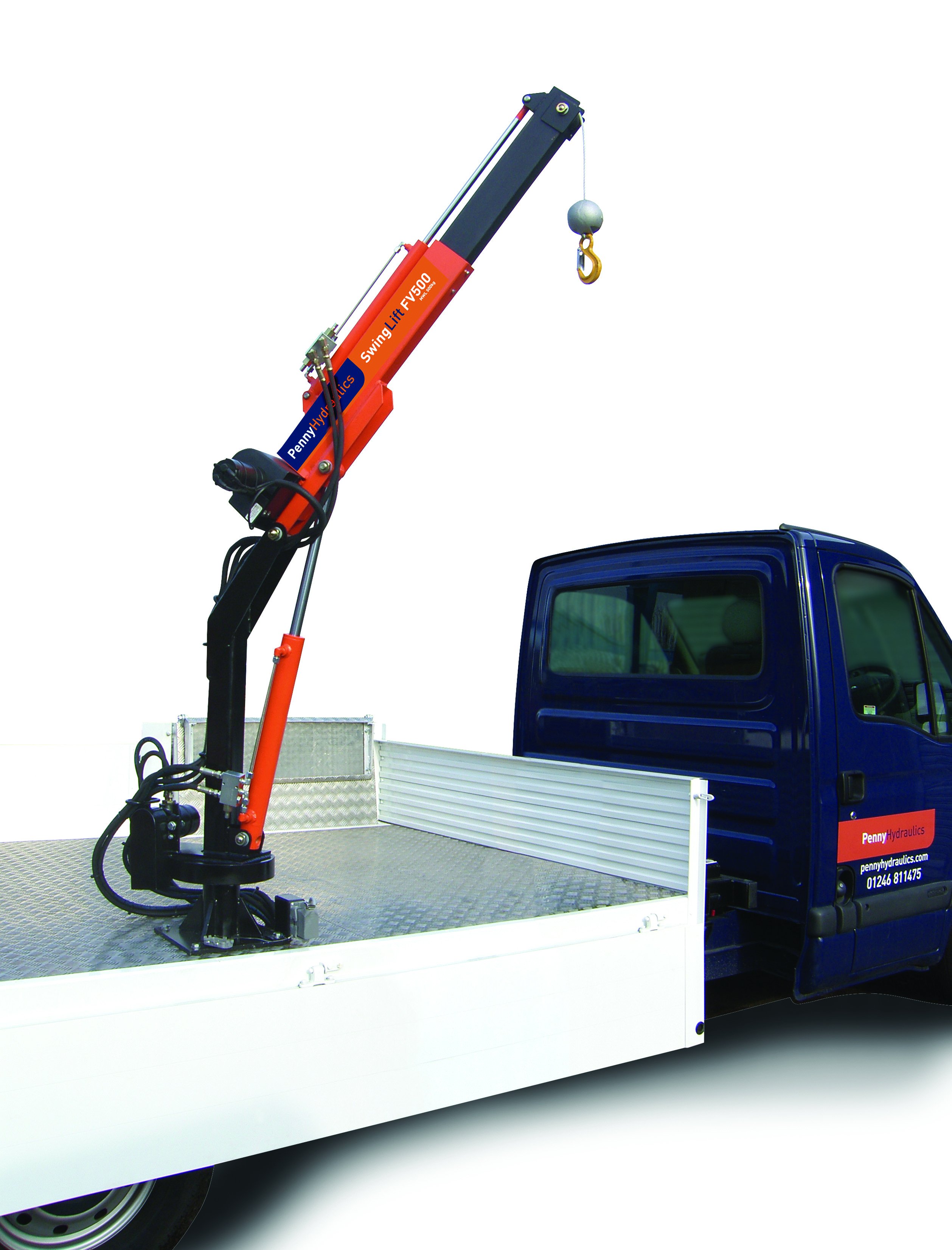
CRANES - THE SAFE ALTERNATIVE TO MANUAL HANDLING
Despite falls in the number of handling related accidents and lost working days there is still room for further improvement. Eliminating the need for manual handling should always be at the heart of any risk assessment and reduction strategy. But in many construction, civil engineering and agricultural applications where the employee uses a commercial vehicle there is often no alternative to lifting and handling. In these cases it is essential to use some form of mechanical handling device such as a vehicle mounted crane.
The latest official figures from the HSE show that industrial injuries related to manual handling remain the biggest cause of time off work in the UK. Almost 35 per cent of reportable workplace injuries, and 16 per cent of all major injuries, in the year ending April 2008 were related to handling. The statistics further reveal that around 1,300,000 days lost working days were due to handling, lifting or carrying and that the average absence from work was seven days. A fair proportion of these involve handling items on and off vans, pickups and other commercial vehicles. Workers in construction and agriculture are most at risk.
Increased awareness of general workplace health and safety issues has led to a decrease in the number of accidents and injuries but there is still more to do. The rules are becoming more stringent and the enforcers more vigilant. Unfortunately accidents and injuries will continue to occur so the efforts of the HSE and other agencies are geared towards reducing them as far as possible. Employers have a duty of care to ensure their staff have the right tools and equipment do their jobs safely. Those that do not could be opening themselves up to a whole load of potential problems if an accident occurs, including disruption to their business, loss of skilled and experienced employees, costs for temporary and permanent replacements, compensation claims, and legal action by the police and regulators.
Realistically there are only two ways to reduce the risks associated with manual handling. The first is to ensure any manual handling remains inside the current guidelines. This is why, for example, packs of minerals and aggregates used in the building and related trades are now found in smaller sizes. The recommended maximum weight to be lifted under any circumstances is just 25kg for men and 15kg for women, not much when one considers that this less than the weight of a typical bag of sand or cement.
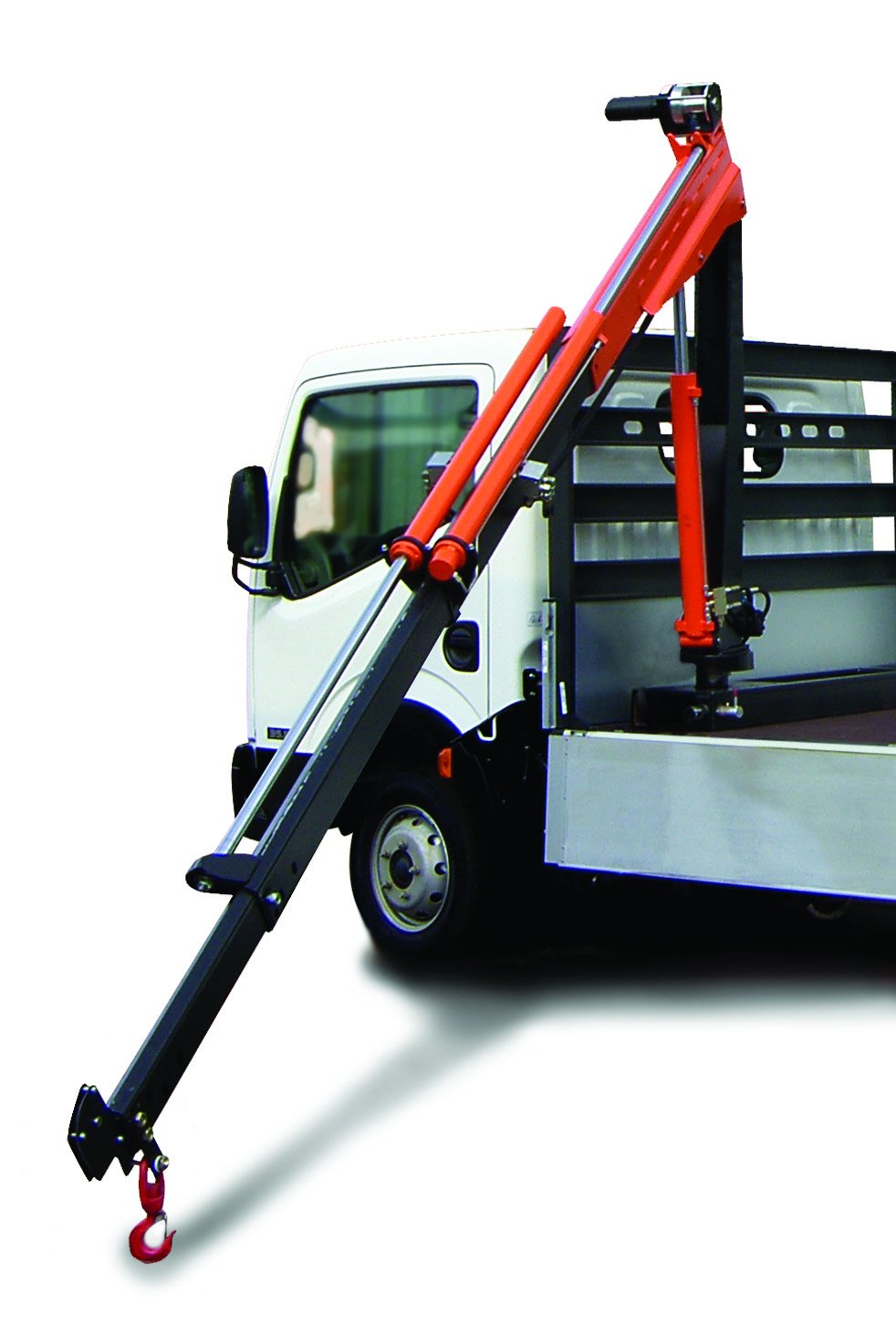
More often, though, items such as tools, plant and materials cannot be made smaller or lighter and it is neither practical or possible to eliminate the handling requirement. When this occurs the only real option is to use some form of mechanical handling aid. There are many choices available but by far the most popular when handling items on and off commercial vehicles is a small crane.
At first this is counter intuitive. Many people incorrectly believe that cranes are only suitable for handling large and bulky items or that they cannot be fitted onto the smaller vehicles in the 3.5 or 7.5 tonne classes. Neither of these misconceptions is true and there are in fact many users from the self employed builder right up to the multinational construction company using such devices on their vans, pickups and tippers.
Small cranes that are well designed, installed correctly and used properly will be robust and reliable. The smallest models typically have maximum lifting weights of around 250kg which makes them ideal for many of the tools, equipment and materials used by the everyday tradesman. These cranes are inexpensive and reliable in operation and can be fitted to most light commercial vehicles to provide a sensible solution to the manual handling conundrum. An added advantage is their ability to raise and lower items below ground level. The trick is to look for cranes without the complexity that can lead to reliability problems. Suppliers that offer good quality pre and post sales support and include regular statutory checks as part of their overall service are ideal.
Another misguided belief about cranes is that they are inefficient and get in the way of productivity. It is true that some handling tasks are quicker if done by hand but the current regulations mean that many of these now fall outside the recommended weight limits. Instead, operators should look at the overall picture and ask if the employee can work more safely and productively over the whole shift. Studies have shown for many years that tired employees work more slowly and are more likely to make mistakes. Reducing the amount of manual handling therefore can help with productivity and safety. Incidentally, another major cause of injuries in the workplace involves a fall from a vehicle. Cranes can help here too because they reduce the need for people to approach and climb on a vehicle while doing their everyday work. In situations where one person using a crane can do the work of two people, productivity suddenly looks very different. The second person can get on with other jobs or may not be needed at all. So it makes sense to take a reasoned and long term view of productivity when evaluating the impact of using cranes, or any other mechanical handling device for that matter.